What's the difference between silk, satin and satin-weave? A guide to avoid buying the wrong thing
Silk, satin and satin-weave are not the same, even though labels often mix them up. We explain what fiber is, what weave is, and how to get it right when you shop.
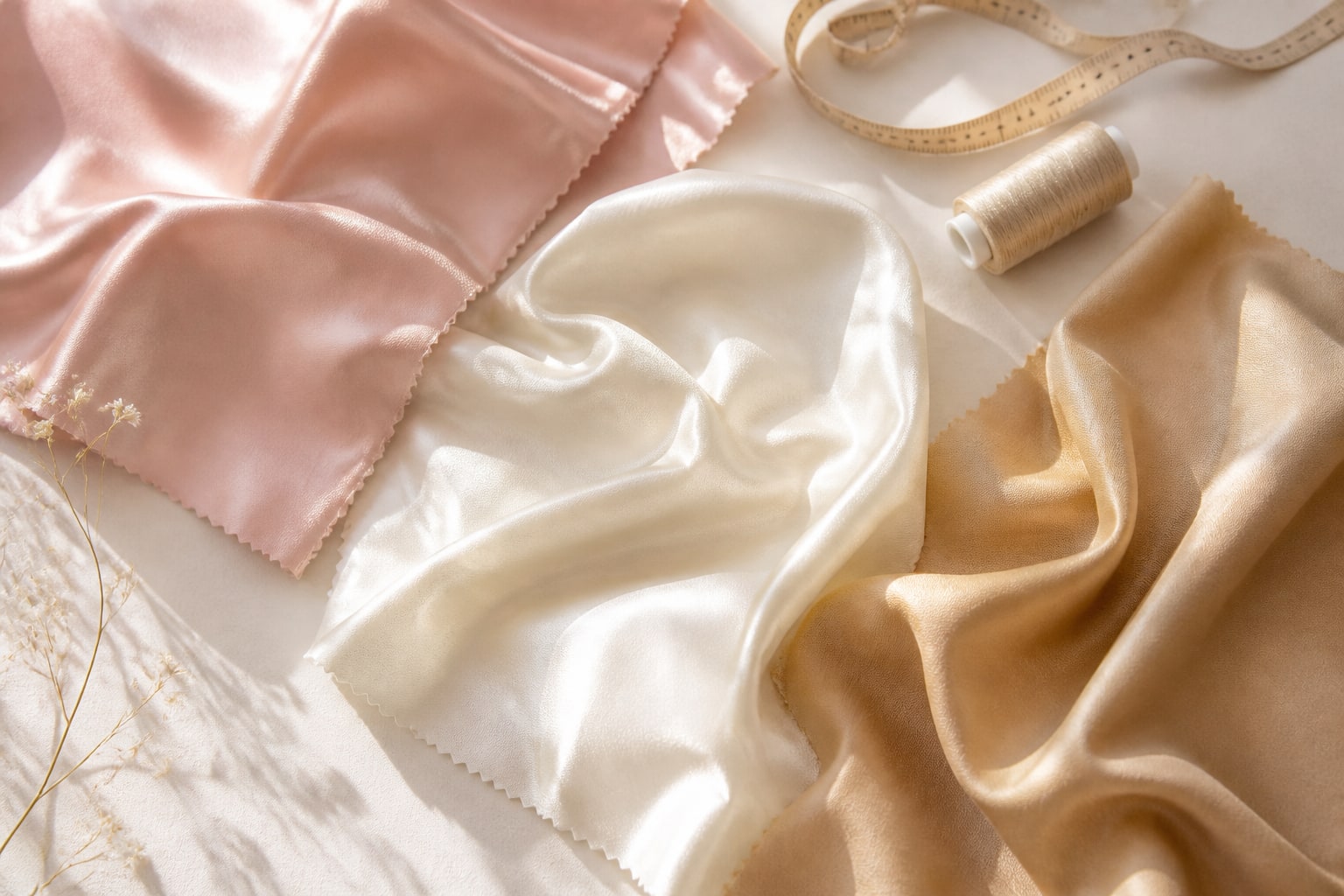
You go to buy a blouse labeled “satin silk”, a pillowcase labeled “satin” and a slip dress labeled “silk effect”. Three labels, three very different prices, and the same question: what am I actually buying? The confusion is understandable because we mix things that are not on the same level. Silk is a fiber; satin and satin-weave are ways of weaving. Understanding this completely changes how you choose a garment, a bedsheet or a ceremony dress.
The most common mistake: comparing things that are not on the same level
Saying “silk or satin” is like saying “wood or parquet”. Silk is the raw material—a natural filament produced by the silkworm. Satin, on the other hand, is a type of textile weave, that is, the way the threads cross on the loom. You can have silk satin, polyester satin, cotton satin or viscose satin. The same goes for satin-weave.
That’s why a “satin” blouse from Zara at €29.95 and a silk satin blouse from a brand like Equipment priced above €300 can look alike in a photo and be radically different products.
Quick table: silk, satin and satin-weave at a glance
Before getting into nuances, here is the summary that helps you read the label:
| Concept | What it is | Material | Typical finish |
|---|---|---|---|
| Silk | Natural fiber of animal origin | Filament from the silkworm | Soft sheen, cool touch |
| Satin | Type of textile weave | Any continuous-filament fiber (silk, polyester, viscose) | Shiny on the front, matte on the back |
| Satin-weave | Traditional Spanish equivalent of satin | Same as satin, today usually implies more body and shine | Stiffer and more lustrous |
What silk exactly is
Silk is a natural protein (fibroin) that the mulberry silkworm secretes to form its cocoon. It is spun into very long continuous filaments, which explains its characteristic touch: smooth, cool to the touch, and with a subtle sheen that changes with the light.
There are very different grades of silk. The most common in fashion is mulberry silk, and its quality is measured in momme (mm): the higher the momme, the denser and more durable. A blouse usually ranges between 12 and 16 mm; a quality silk bedsheet, between 19 and 25 mm.
What satin is (and why it shines)
Satin is a weave, not a material. On the loom, the weft threads pass over several warp threads before crossing under one (typically 4 over and 1 under). That long “float” is what creates the smooth, shiny surface on one side and the matte finish on the other.
For the weave to show off, the fiber must be continuous-filament: silk, polyester, viscose or acetate. That’s why cotton satin exists but behaves differently: it shines less and wrinkles more.
What satin-weave is and how it resembles satin
Here’s the interesting part. Technically, satin-weave and satin are the same weave. “Raso” is the traditional word in Spanish; “satén” is the term that took hold with international fashion.
Today, in everyday store usage, a nuance has crept in: when a brand says “raso”, it usually refers to a fabric with more body, stiffer and shinier—typical of party dresses and structured lingerie. When it says “satén”, we think of something more fluid, with drape, in the style of a slip dress. It is not an official rule, but it works as a shortcut.
How to tell natural silk from synthetic satin
If you have the piece in your hand, there are fairly reliable signs:
- Temperature: natural silk feels cool to the touch and warms up quickly against your skin. Polyester stays at room temperature.
- Wrinkles: squeeze a piece in your fist. Silk wrinkles but falls back into shape; polyester comes back almost perfect, as if nothing had happened.
- Sheen: silk has a sheen that changes with the angle (a subtle iridescent effect). Synthetic satin shines in a flatter, more uniform way.
- Label: the definitive answer. “100% silk” is silk. “100% polyester” with a satin finish is polyester satin. “Silk satin” implies both things: satin weave + silk fiber.
The trick of burning a thread (silk smells like burnt hair, polyester melts into a bead) works, but you will rarely do it in the fitting room.
Drape, touch and how each one moves
This is what you will notice when you wear it:
- Silk: fluid drape, adapts to the body without clinging excessively, breathes and regulates temperature. Perfect for blouses, slip dresses and scarves.
- Satin (viscose or fine polyester): drape similar to silk at a much lower price, but breathes less. It clings more to tight areas and can build up static.
- Satin-weave (more structured): has its own body and keeps the pattern’s shape. Ideal for column dresses, midi skirts with controlled volume and bustier-style lingerie.
If you are building a wardrobe foundation meant to last, it is worth understanding which pieces justify investing in fine fiber; we cover this in depth in this guide to timeless pieces worth the investment.
Price: why the difference is so large
The range is enormous and it makes sense:
- Polyester satin: a blouse from Zara, Mango or H&M between €25 and €50.
- Viscose satin: mid-range (Massimo Dutti, & Other Stories, Sézane), between €70 and €150.
- Silk satin: from €200 at brands like Equipment, Vince or Ba&sh, and easily above €500 in luxury.
- Ceremony satin-weave: very variable, since pattern and tailoring weigh heavily. A satin-weave dress from Spanish designers such as Redondo Brand or Cherubina starts at €400–600.
What to choose each one for: real uses
- Blouse for the office and afternoon plans: viscose satin. Lovely drape, good price, survives washing.
- Slip dress for a dinner: here silk really shows. If the budget doesn’t stretch, viscose satin before polyester.
- Structured wedding-guest dress: satin-weave. It keeps the pattern, flatters in photos and lasts the whole day. If you’re going to a wedding, this overview of shoes for a midi dress at an afternoon wedding may help.
- Pajamas and everyday lingerie: viscose satin or satin-finish modal. Cool, comfortable and washable without drama.
- Bedding: here the debate is real. Cotton satin is soft and breathable; polyester satin shines more but retains heat; mulberry silk (19 mm and up) is the premium option and shows in hair and skin, though it requires gentle washing.
Care: what you need to know before buying
- Silk: hand wash with neutral soap or dry clean. Never tumble dry. Iron on low heat and inside out.
- Viscose satin: cold wash in a mesh bag, delicate cycle. It wrinkles and accepts gentle ironing.
- Polyester satin: machine washable at 30 °C without problems. Practically needs no ironing. In exchange, it doesn’t breathe.
- Ceremony satin-weave: almost always dry clean, especially if it has lining and interlining.
So, satin-weave or satin? Which is better?
Neither is better in the abstract: they are different tools. If you’re looking for a fluid, lingerie-style garment with drape against the body, think of satin (and if possible, silk or viscose). If you want a piece with structure, strong shine and presence for an event, think of satin-weave. And if what you’re after is the fiber, not the finish, ask for silk and check the percentage on the label.
The next time you read “satin blouse”, you’ll know the right question is not “silk or satin?”, but “satin, made of what?”. That’s where it all is.