Which shoes go best with a midi dress at an afternoon wedding?
A practical guide to choosing wedding guest shoes when wearing a midi dress to an afternoon wedding: heel type, colour, material and mistakes to avoid.
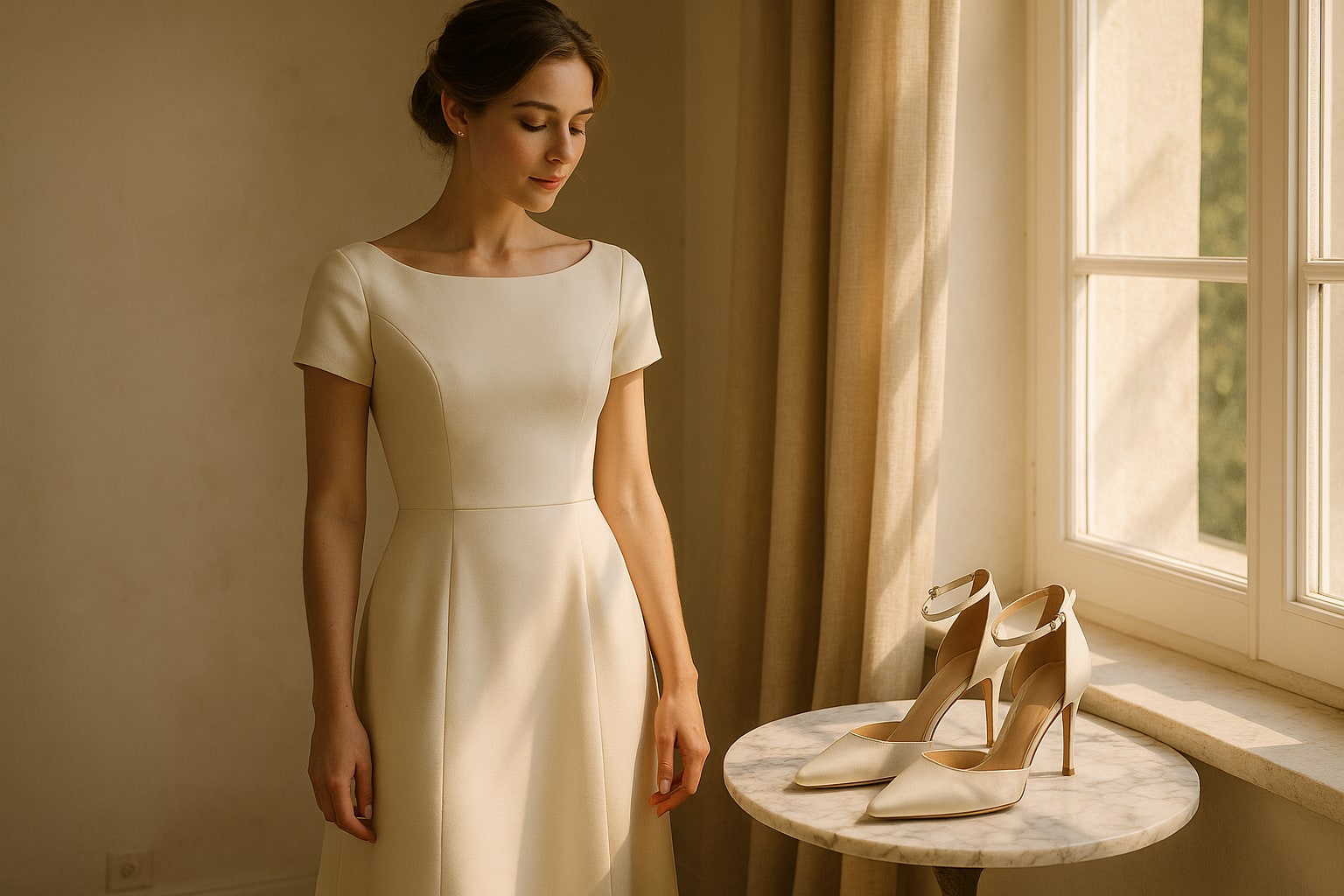
The midi dress is probably the most forgiving piece in the wedding guest wardrobe: it flatters almost every silhouette, works for a religious ceremony and lets you dance without holding up the hem. But it has a catch: the length between the knee and the ankle is demanding when it comes to footwear. The wrong shoe cuts the leg, flattens the outfit and turns a carefully planned look into a suit that “just doesn’t quite work”.
Let’s get specific: which shoe to wear with the midi dress you have, how much heel you need, which colour never fails and which mistakes you see at every afternoon wedding.
The basic rule: a midi asks you to elongate, not to cut
The midi ends at the widest part of the calf or just above the ankle. Any shoe that draws a strong horizontal line there (wide ankle straps, thick straps, closed booties in summer) shortens the leg visually. What we’re after is the opposite: continuity between leg and foot.
Translated into buying decisions:
- V-neck or U-shaped vamp → elongates.
- Thin ankle straps, ideally in your skin tone → elongate.
- Fine or almond toe → more slimming than a round toe.
- Medium or high heel, never a closed bootie with a chiffon midi.
Summary table: which shoe with which midi dress
Before going into detail, here is the quick cheat sheet for an afternoon wedding (ceremony around 6-7 pm, cocktails at sunset):
| Type of midi dress | Ideal shoe | Heel height | Winning colour |
|---|---|---|---|
| Fluid chiffon or pleated | Thin-strap sandal | 7-9 cm | Nude, soft gold |
| Satin with drape | Fine-toe pump or slingback | 6-8 cm | Champagne, old silver |
| Structured knit or crepe | Slingback or kitten heel | 4-6 cm | Burgundy, matte black |
| Slip dress cut | Minimalist jewelled sandal | 8-10 cm | Cool metallic |
| Floral print or bright colour | Plain pump in the print’s tone | 6-8 cm | Nude or the main tone |
| Midi with volume (tulle, taffeta) | Closed fine-toe pump | 7-9 cm | Dress tone |
Strappy sandal: the safest option for afternoon-into-evening
If in doubt, go for a sandal. It’s the shoe that lives best with a midi because it shows the vamp and doesn’t interrupt the line of the leg. For an afternoon wedding the thin-strap sandal with a 7 to 9 cm heel works especially well, in a cup or block shape (more stable than a pure stiletto if there’s grass or cobblestones).
Models performing well this season:
- Mango – Heeled sandal with crossed straps, around €49.99, in nude and black. Synthetic leather. Comfortable for a long ceremony.
- Sézane – “Louna” sandal in leather, about €195, 8 cm heel. Camel tone that works as a nude on medium skin tones.
- Aquazzura – “Gatsby” with crystal fringe, around €850. Pure statement for a plain dress.
It works best if you have a slim or medium ankle. Avoid it if the dress already carries a lot of detail at the hem: they compete.
Classic pump: when the dress takes the lead
The pump is the answer when the dress is the star: satin, embroidery, an elaborate neckline. The pump stays quiet and lets the dress speak. For a midi, look for a fine or almond toe and a 6 to 8 cm heel.
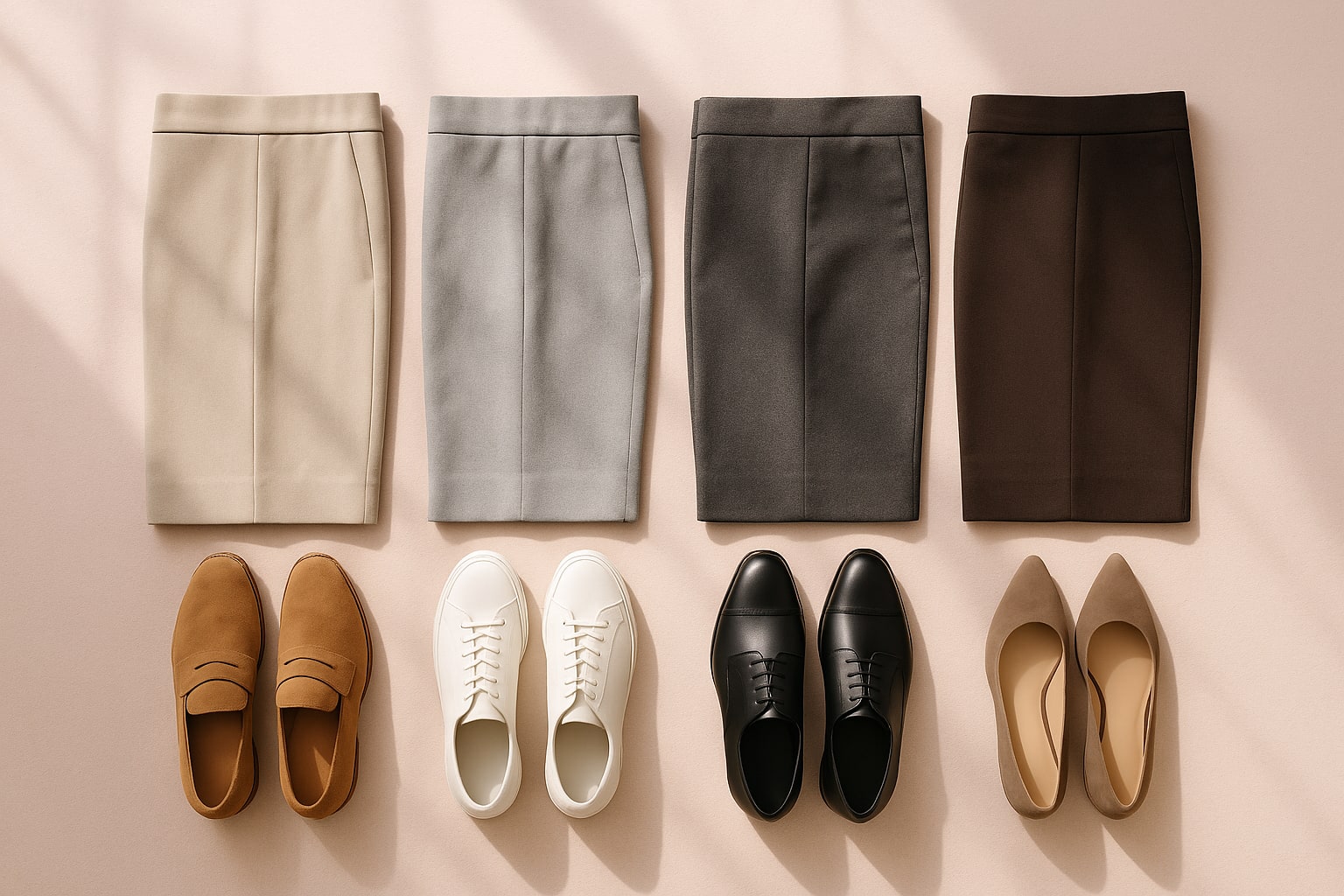
A well-chosen nude pump—the tone should match your skin, not be a generic beige—is the most profitable investment in the guest wardrobe. On very fair skin, rosy ivory works; on medium skin, camel or caramel; on dark skin, chocolate or copper.
Reliable references: Pretty Ballerinas has pumps from €175, Magrit works comfortable lasts for Spanish feet between €200 and €320, and Manolo Blahnik with the “BB” (around €645) remains the pump nobody argues with.
Slingback: the perfect balance for an ankle-length midi
If your midi falls just above the ankle (the most common length this season), the slingback is probably your best ally. It leaves the heel bare, elongates the foot and brings a more contemporary feel than a closed pump.
Chanel’s two-tone slingback set the standard, but there are very decent options at Massimo Dutti (€89.95) and & Other Stories (€129). Pointed toe, 5 to 7 cm heel, and it works with almost any structured midi.
It works best with crepe, fine knit or mikado dresses. Avoid it if the dress is very fluid and vaporous: ask for something more feminine, like the sandal.
Kitten heel: yes, at an afternoon wedding too
The kitten heel (4-5 cm heel) is back and isn’t a runway whim: it’s the solution for weddings with many hours on your feet, uneven ground, or simply for anyone who doesn’t want to suffer. It works at an afternoon wedding as long as the rest of the look has some presence: a good headpiece, visible jewellery, a structured clutch.
At daytime events with a midi dress and headpiece it’s practically the default choice. Look at Zara (€39.95), Sézane (€185) or Roger Vivier for the version with a jewelled buckle (around €795).
The colour: four bets that don’t fail
Forget trying to match the dress exactly unless it’s very pastel. These four tones solve 90% of afternoon weddings:
- Nude in your skin tone. The trick that elongates the leg without saying a word. Essential to know what “your” nude is.
- Soft metallic (champagne, old silver, rose gold). Adds light without shouting. Perfect with satin and chiffon.
- Burgundy or wine. The new elegant neutral for afternoon-into-evening, especially from September to March. Pairs with black, bottle green, camel and dark floral print.
- Matte black. Yes, at a wedding. With a bright or printed midi, a matte black pump (never glossy patent for formal evening) is sophisticated and freshens the outfit.
Material by season
- Spring and summer (April-September): satin, nappa leather, light suede, transparent PVC in moderation. Avoid velvet.
- Autumn and winter (October-March): suede, satin-finish leather, velvet, jewelled details. Avoid raffia and esparto, even if the dress has long sleeves.
A note on patent leather: it divides opinions, but at a formal afternoon wedding a satin or matte finish works better than mirror-shine, which carries a 2000s air that doesn’t always add up.
The five mistakes repeated at every wedding
- Shoe with a wide ankle strap. It cuts the leg at the same height where the dress already cuts it. Double cut, double problem.
- Wedge at a formal afternoon wedding. Wedges belong to the morning or to very relaxed countryside weddings. With a satin midi, no.
- Bootie with a fluid chiffon dress. Only works with a knit or wool midi in a very wintry look, and even then with nuance.
- New shoe not broken in. For a six-hour ceremony, wear them at home for at least two afternoons first.
- Fine stiletto on the lawn. It sinks in. Opt for a cup, block or square heel if you know there’s grass.
How to combine shoe, bag and headpiece without overloading
The rule we use when we go to many weddings: two of the three accessories in the same register, the third as a contrast. If the shoe is nude and the bag is nude, the headpiece can be coloured. If the shoe is burgundy and the headpiece is too, the bag goes in gold or nude. Matching all three flattens the look; mixing all three disorders it.
To work the full palette—including how to dose a strong colour without overdoing it—you’ll find ideas in this guide on how to wear cherry red without overdoing it, applicable to burgundy and wine.
And if the wedding starts in the afternoon and ends in the early hours
Carry a second foldable pair in your bag or in the car. It’s not giving up, it’s common sense. Leather ballet flats in the same tone as your main shoe (nude, black or metallic) let you endure the open bar without taking your shoes off in the middle of the dance floor. Rothy’s, Porselli and the foldable ones from Repetto fit in a medium clutch and save the night.
The midi is a forgiving dress, but the shoe is what decides whether the outfit looks resolved or improvised. Choose thinking about the line of your leg, the hours you’ll be on your feet and the real tone of your skin, not the photo in the shop window. The rest takes care of itself.