What is the correct length for dress trousers? A guide by shoe type
The correct length for dress trousers depends on the shoes you wear with them: here is the exact matrix of break, hem drop and centimetres so the hem falls perfectly over Oxfords, loafers, derbies or boots.
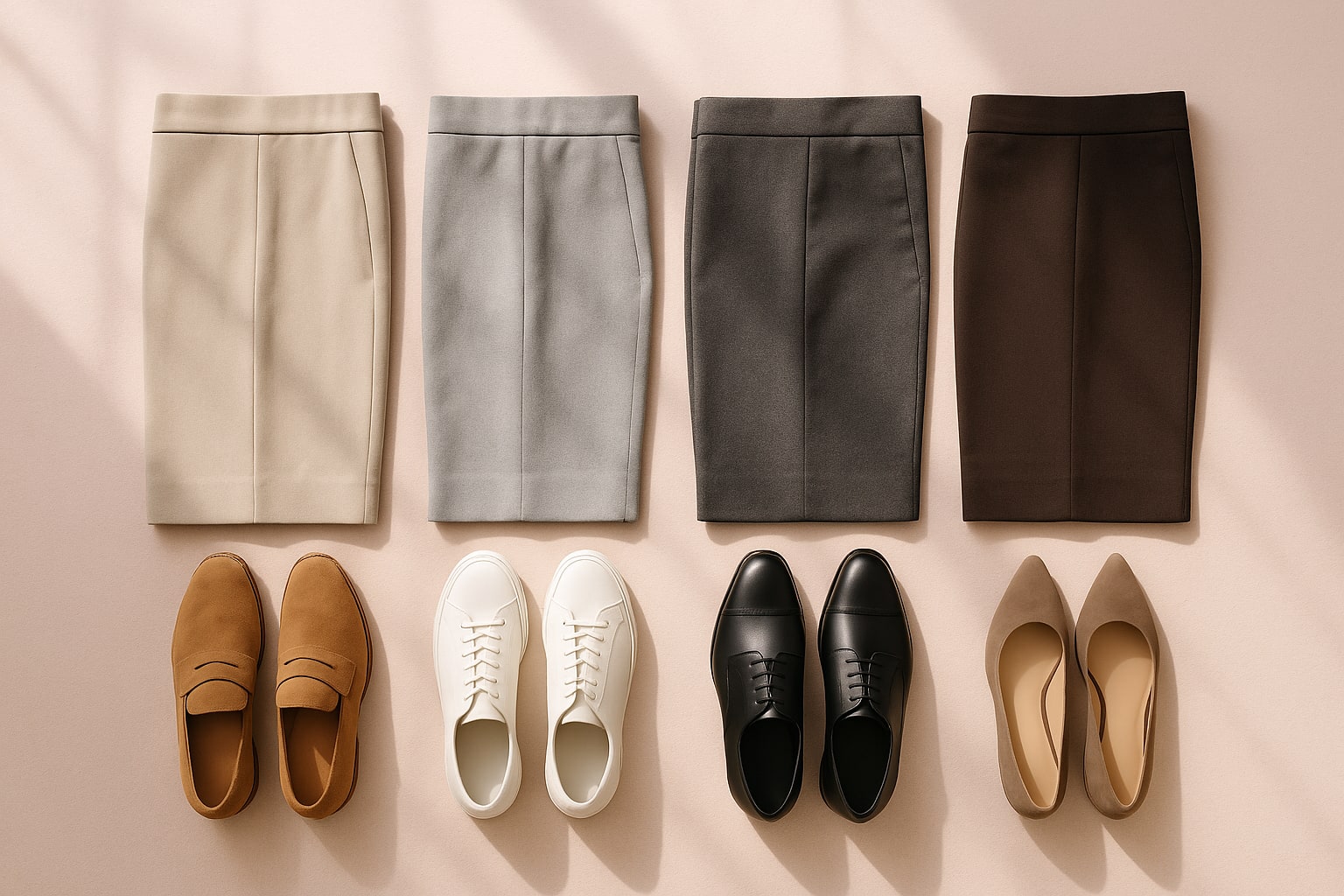
There is one detail that separates a well-worn suit from one that looks borrowed, and it is neither the fabric nor the cut: it is the hem. Two centimetres too long or too short over the instep completely changes the silhouette, and the reference for adjusting them is not your height or the trouser pattern, but the shoe you will wear underneath.
This guide answers the question concretely, with measurements in centimetres and inches, and a clear rule for each type of footwear.
Why the length of dress trousers matters so much
A tailored trouser is designed to fall over the shoe, not onto the floor. If it is too long, it bunches at the ankle and breaks the vertical line that elongates the leg; if it is too short, it shows too much sock and looks borrowed. The ideal point exists and it can be measured.
The most common mistake is not getting the centimetres wrong, but adjusting the hem without trying on the shoe you will actually wear. A trouser that is perfect with Oxfords can look ridiculous with loafers, and vice versa.
Summary table: ideal length by shoe and break
This is the quick matrix to quote and keep. The measurements are approximate for a standard straight-leg dress trouser.
| Shoe | Recommended break | Hem drop | Hem height (approx.) |
|---|---|---|---|
| Oxford | Medium break | Rests on the instep, one soft crease | Touches the start of the shoe |
| Derby | Medium break | Same as Oxford, can tolerate slightly more fabric | 0.5 cm over the instep |
| Loafer | Quarter or no break | 1 cm above the instep | Shows the vamp of the shoe |
| Monk strap | Quarter break | Grazes the instep without creasing | Flush with the start of the shoe |
| Dress boot | No break | 1-2 cm above the start of the shaft | Clear |
| Minimalist sneaker | No break or cropped | 2-3 cm above the ankle | Ankle exposed |
Quick glossary: break, hem, turn-up and cuff
Before measuring, it helps to call things by their proper names.
- Hem: the bottom edge of the trouser, the part that touches the shoe.
- Hem stitch: the internal seam that finishes the hem.
- Turn-up (cuff): the visible outward fold, 3 to 4.5 cm, typical of classic tailored trousers.
- Break: the crease or fold the trouser forms when it rests on the shoe.
Break is measured in four intensities: full break (pronounced crease, long trouser), medium break (a soft crease), quarter break (barely a hint) and no break (straight hem that does not touch the shoe).
Correct length with Oxford shoes
The Oxford is the most formal shoe and calls for a trouser that accompanies it with presence. The rule: the hem should rest over the instep forming a single soft crease, never two or three.
- Break: medium.
- Back drop: the hem should cover half the heel counter of the shoe, leaving about 2-3 cm of the back visible.
- If you wear a turn-up, also choose medium break; the turn-up adds weight and falls more straight.
Avoid it if the trouser is very narrow at the hem: with an Oxford, a hem that is too tight rides up over the laces and looks sloppy.
Correct length with Derby shoes
The Derby is the Oxford’s close cousin, with open lacing and a slightly more relaxed air. It takes exactly the same length, with one nuance: it tolerates half a centimetre of extra fabric without losing elegance, because its construction already looks less severe.
It is the most forgiving shoe if you are torn between two lengths: lean towards the longer one.
Correct length with loafers
Here the game changes. The loafer calls for showing the instep; it is part of its charm. If you cover the vamp with fabric, you lose all the grace of the shoe.
- Break: quarter or simply no break.
- The hem should sit approximately 1 cm above the instep, letting the full vamp of the loafer show.
- With tasselled loafers or Belgian loafers, go a little higher still: 1.5 cm.
This is the length Italian tailoring favours and that you see repeated in street style at Pitti Uomo every season. If you wear socks, make them the colour of the trousers or of the shoe so the transition is clean.
Correct length with monk straps
The monk, with its buckles, is a shoe with personality: it needs room to breathe. A quarter break is ideal; the hem grazes the instep without fully resting on it, letting the buckle show without cutting it off with fabric.
If the trouser covers the upper buckle of the double monk, it is too long.
Correct length with dress boots
With boots the logic is reversed: you do not want the trouser to touch the start of the shaft, because it bunches and creates an unsightly fold right where the silhouette should be cleanest.
- Break: no break.
- The hem should fall 1-2 cm above the start of the boot shaft.
- If the trouser is too wide, the Italian trick of a slight taper in the last third works very well.
Length with minimalist sneakers or white trainers
The suit with sneakers is an established formula, but it requires a different length. The trouser should be cropped, between 2 and 3 cm above the ankle, or just flush.
The feminine equivalent of this more relaxed proposal works just as well with a structured jacket instead of a more fluid blazer, as long as the proportion of the outfit respects the exposed ankle.
How to measure the break yourself at home
You do not need a tailor for a first approximation. What you do need: put on the shoes you will wear with the trousers, stand up, and adopt a natural posture.
- Put on the final shoe (not an approximate one).
- Put the trousers on without a belt, at the real height at which you will wear them.
- Check the profile in a full-length mirror.
- Mark with a pin the point where you want the hem to fall according to the table above.
- Check the back: the hem should fall 1.5 to 2.5 cm longer at the back than at the front on trousers without a turn-up. With a turn-up, the length is identical at front and back.
Trousers with a turn-up vs. without: does the length change?
Yes, quite a lot. The turn-up (3-4.5 cm of visible fold) adds weight to the hem and makes the trouser fall straighter, with less natural break. That is why trousers with a turn-up should be worn with a quarter break at most: if you add a medium break, the outfit looks overloaded.
The turn-up looks especially good with Oxfords, Derbies and monks; less so with loafers, where it competes visually with the vamp of the shoe.
Common mistakes when adjusting the hem
- Adjusting the trousers barefoot or in house slippers.
- Using the same length for all the shoes in the wardrobe.
- Cutting without trying on with a thick sock if the trousers are for winter.
- Forgetting that brand-new trousers “settle” with wear and lose 0.5-1 cm of drop after the first wash or pressing.
- Asking the tailor for “a finger less” without specifying the break: each tailor interprets that phrase in their own way.
Frequently asked questions
How many centimetres should the hem sit from the floor? There is no universal measurement: it depends on the shoe. With Oxfords, the hem falls between 3 and 4 cm from the floor at the front; with loafers, between 5 and 6 cm; with boots, above the shaft (varies by model).
What happens if I wear the same trousers with different shoes? Choose the length thinking about the footwear you will use most. For versatility, the medium break is the middle ground that best suits Oxfords, Derbies and monks, although it is not perfect for loafers or boots.
Do feminine dress trousers follow the same rules? The break rules are universal. With tailored feminine trousers and pumps or slingbacks, the same logic as with loafers applies: hem 0.5-1 cm above the instep to show the neckline of the shoe.
Can I fold the trousers inward if they are too long? As a temporary solution, yes (invisible cuffing, tucking 2-3 cm inward). As a permanent solution, no: it deforms the pattern and creates bulk at the ankle. Take them to the tailor.
And if the trousers are pleated and very wide? Wide trousers such as palazzo or wide-leg styles call for full break or even a slight drag, and are almost always worn with a heel or a hidden platform. The instep rule does not apply because the width of the hem completely changes the drape.