Which bag color goes with everything? The three shades that solve any look
The short answer is black, beige/nude and cognac brown: three versatile bags that solve 90% of your wardrobe. We tell you when to choose each one and how to combine them effortlessly.
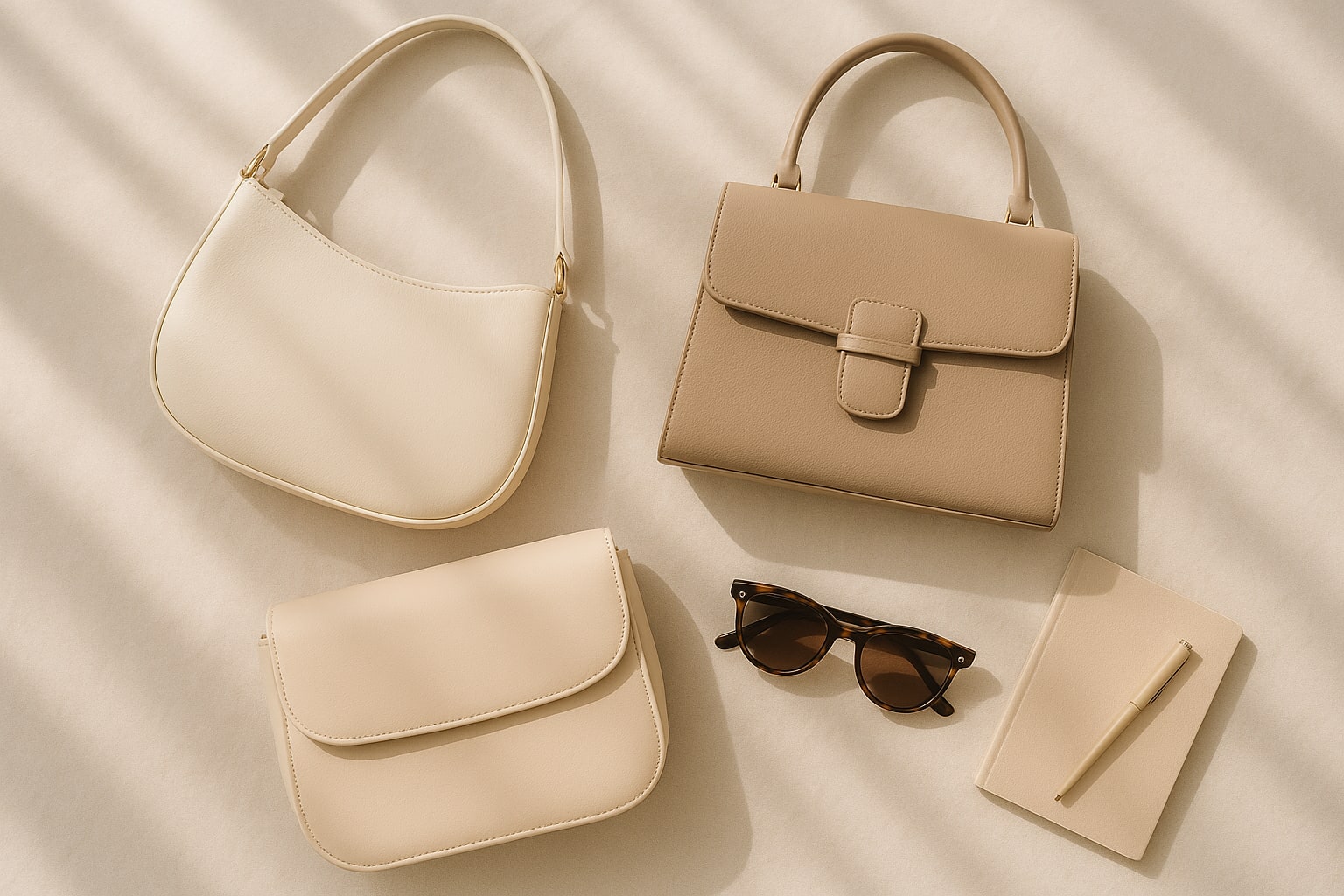
If you had to keep just three bags for the rest of your life, these would be the ones that never fail: black, beige/nude and cognac brown. They are the three neutral colors that go with practically everything you already have in your wardrobe, they work day and night, and they age well whether it’s a €40 model or a €2,000 one. If you’re looking for a bag color that goes with everything, start here.
The quick answer: black, beige/nude and cognac brown
There’s no need to overthink it. These are the three shades the industry has been repeating on the runway for decades and that fashion editors keep buying again and again because they work without thinking.
| Color | Best for | Pairs especially well with | Typical price range |
|---|---|---|---|
| Black | Office, night, winter, tailored looks | White, grey, navy, red, dark denim | €30 – €3,000 |
| Beige / nude | Spring-summer, daytime events, bright office | White, camel, pastels, light denim, olive green | €40 – €2,500 |
| Cognac brown | Transitional season, autumn, casual-chic style | Camel, cream, chocolate, burgundy, denim, bottle green | €50 – €2,800 |
Why these three colors work with any look
All three are neutrals, but each one brings a different temperature. Black is cool and bold, beige is warm and luminous, and cognac is warm and deep. Together they cover the whole range of clothing you usually wear: dark basics, light garments and earth tones.
Moreover, they are colors that never “go out of style” because they were never fashionable in the strict sense: they sit above the trend cycle. That is what makes them timeless women’s bags, rather than a specific campaign.
Black bag: the one that goes with everything (really)
If you can only have one bag, make it black. It’s the most versatile for the winter wardrobe core, for the office and for any evening event. A structured tote or a medium shoulder bag will cover you from Monday to Sunday.
When to choose black
- Tailored looks (suit, blazer, white shirt).
- Cocktail dresses, LBDs and evening events.
- Rainy or winter days, when dark coats dominate.
- When the rest of the look already has color or print and you need to calm it down.
Reference models and prices
- Zara, structured faux-leather tote: around €35.95.
- Massimo Dutti, nappa leather hobo: approx. €149.
- Polène Paris, Numéro Un Nano model in smooth leather: €390.
- Prada, Re-Edition 2005 in nylon: from €1,600.
It looks best if you choose a matte or semi-matte finish for daytime and save patent and satin finishes for night. Avoid it if your wardrobe is almost all black and you want to add some light: there, beige is the better choice.
Beige or nude bag: the one that lights up without making a fuss
Beige, nude and cream are the bright alternative to black. They flatter enormously in spring and summer, soften dark looks and are the favorite daytime bag of guests because they don’t compete with the dress.
An important detail: within “beige” there are variations. Cream is cooler and cleaner, nude leans pinkish and sand is more yellowish. If your skin and wardrobe are cool, go for cream; if they are warm, go for sand.
Reference models and prices
- Mango, raffia shopper combined with faux leather: €49.99.
- Parfois, nude crossbody bag: €29.99.
- Bimba y Lola, small model in cream: from €175.
- The Row, Margaux in toffee leather: around €4,500 (high end).
It looks great with knit midi dresses in earth tones, with light denim and with all-white looks. Avoid it if you work with small children or commute by metro every day: light nude stains quickly and needs frequent cleaning.
Cognac brown bag: the one that gives instant style
Cognac (that warm brown with orange highlights, also called tan or whisky) is the ace up the sleeve of the transitional-season wardrobe. It adds a patina of sophistication that black doesn’t provide and a warmth that beige doesn’t reach. In natural leather, it improves with use.
It’s the color that has been associated for years with the quiet luxury style of brands like The Row, Khaite or Loewe, and you’ll see it in any street style in Paris or Milan between September and November.
Reference models and prices
- Zara, crossbody in cognac-effect leather: €29.95.
- & Other Stories, tanned cowhide: approx. €179.
- Loewe, small Puzzle in tan: from €2,950.
It pairs with denim in all shades, with camel, cream, chocolate, olive green and bottle green, with burgundy and with a well-dosed cherry red. Avoid it if you wear full black: the contrast can look abrupt unless you add a cognac belt to repeat the tone.
How to match bag and look without overthinking
The most useful and least known rule: the bag doesn’t have to match the shoes, but it does have to dialogue with an element of the look. It can be the belt, a gold button on the coat, the tone of the watch or a detail of the print.
Three foolproof shortcuts
- Third color rule: if you wear two colors in your clothing, the bag provides the third in a neutral version.
- Temperature repetition: cool looks (navy, grey, optical white) call for black; warm looks (camel, cream, olive) call for beige or cognac.
- Controlled contrast: with a full black look, a beige or cognac bag brightens it up; with a full light look, a black bag anchors it.
And metallics, burgundy or red?
They are beautiful bags, but they don’t fall into the “goes with everything” category. They are whimsical bags, for a specific occasion or for a season. Silver and soft gold work almost like neutrals in evening looks, burgundy is the favorite of autumn 2026 and red adds spark to monochrome looks, but none of them replaces the three basics.
If you already have black, beige and cognac sorted, then yes: a champagne metallic or a satin burgundy is the perfect fourth piece. Before that, no.
The minimum bag wardrobe essentials
If you’re building your collection from scratch, this would be the logical buying order. You can go deeper into the five-piece rule for bags, but the starting point is clear.
| Order | Piece | Main use | Recommended investment |
|---|---|---|---|
| 1st | Medium black tote or shoulder bag | Daily, office, travel | Mid-high (lasts for years) |
| 2nd | Small beige/nude crossbody | Daytime events, summer | Medium |
| 3rd | Structured cognac bag | Transitional season, casual-chic | Mid-high |
| 4th | Black or metallic clutch | Night and events | Low-medium |
| 5th | Color or print whim | Occasional | Free |
Which shape to choose in each color (it matters almost as much as the shade)
Color opens the door, but shape closes the look. In black, go for structured and clean: a square tote, a baguette-style shoulder bag or a hobo. In beige, softer and more organic shapes enhance the brightness of the tone: hobos, bucket bags, rigid baskets with handles. In cognac, designs with visible stitching, metal buckles or saddle-style flaps bring out the best in the leather.
And a quality detail: in all three colors, prioritize matte gold or antique silver hardware over shiny gold. They age better and look more expensive, no matter what the bag costs.