What is the difference between cashmere, merino wool and lambswool?
Three wools, three price points and three very different personalities: we explain what sets them apart in softness, warmth and durability so you can choose wisely your next coat or sweater.
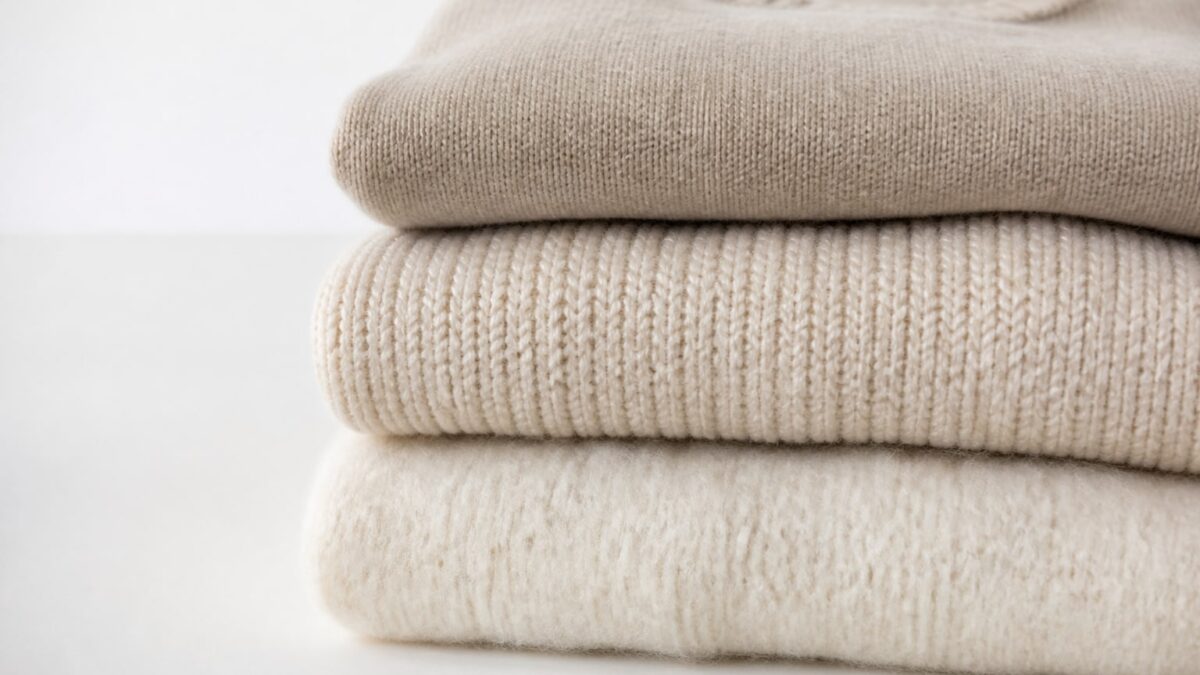
Every season the same question comes up in the fitting room: is it worth paying three times as much for a cashmere sweater instead of a merino wool one? The answer is not as simple as “yes, always” or “no, it’s the same thing under another name”. They are three natural fibres with different origins, textures and uses, and understanding their differences saves you money badly spent and disappointment with garments that lose their shape after two washes.
What cashmere is and where it comes from
Cashmere is obtained from the undercoat of the Cashmere goat, an animal that lives in extremely cold regions such as Mongolia, Afghanistan and northern India. Each goat produces between 150 and 200 grams of fibre a year, which largely explains its price.
That fibre is extremely fine — between 14 and 19 microns in diameter — and short, which gives it a silky feel but also makes it more delicate when subjected to friction. A genuine cashmere sweater has that “buttery touch” that you recognise as soon as you touch it, far softer than any sheep’s wool.
What merino wool is and why it is so versatile
Merino wool comes from the Merino sheep, originally from Spain although today it is raised mainly in Australia and New Zealand. Its fibre measures between 17 and 24 microns depending on the grade, and although it does not reach the fineness of cashmere, it is well above conventional wool.
What makes merino special is its balance: it regulates body temperature, is breathable, resists odours and does not itch like traditional wool. That is why it is used so widely in dress knitwear as well as in technical mountain clothing and sports socks.
What lambswool is and how it differs from adult wool
Lambswool is the first shearing of a lamb, carried out before it is seven months old. That first fibre is finer, more elastic and softer than the wool of an adult sheep, although it falls short of cashmere and premium merino in terms of softness.
Its great virtue is elasticity: it recovers its shape better than other wools, resists pilling and withstands daily wear with more dignity. It is the usual fibre in English-style knitwear and everyday garments that need to hold up well over time.
Comparison table: cashmere vs merino wool vs lambswool
At a glance, this is how the three fibres behave in the aspects that really matter when buying:
| Feature | Cashmere | Merino wool | Lambswool |
|---|---|---|---|
| Animal origin | Cashmere goat | Merino sheep | Lamb (first shearing) |
| Fibre thickness | 14-19 microns | 17-24 microns | 20-24 microns approx. |
| Softness to the touch | Very high | High | Medium-high |
| Warmth | Very high (insulates without weight) | High and breathable | Medium-high |
| Durability / pilling resistance | Medium (loses shape with heavy use) | High | High |
| Approximate price (sweater, Spain) | 150-400 € | 50-120 € | 40-90 € |
Softness: why cashmere is the softest wool on the market
If we speak only of touch, cashmere wins without discussion: its fibre fineness is the technical reason it is considered the softest wool on the market. It is the sensation you look for in a scarf that rests directly on the skin of the neck.
Merino wool follows closely behind, especially in extra-fine grades, and is usually the most sensible option if you have sensitive skin but do not want to pay cashmere prices. Lambswool, although soft for sheep’s wool, feels a little more “full-bodied” to the touch, especially in heavier knits.
Warmth: which keeps you warmest and why
Here the structure of the fibre comes into play, not just its fineness. Cashmere has an exceptional thermal insulation capacity in relation to its weight: a fine cashmere sweater keeps you warmer than a much thicker cotton one.
Merino wool keeps you very warm and also regulates moisture, so it does not feel heavy or stifling indoors with central heating. Lambswool, with its thicker fibre, keeps you warm in a more “physical” way: you feel the weight of the garment and that sense of an extra layer, ideal for outdoors on dry cold days.
Durability: which holds up best over time
Paradoxically, the most luxurious fibre is not the most resistant. Cashmere, being short and fine, tends to form pills through friction (a bag over the shoulder, a coat worn over it) and loses its shape if washed badly or dried in a tumble dryer.
Merino wool and lambswool, having somewhat longer fibres with more elastic memory, recover their shape better after use and withstand more washes without visible deterioration. If you are looking for an intensively worn everyday garment, these two are more forgiving than cashmere.
Price: why cashmere is so expensive and whether it is really worth it
The price of cashmere reflects scarcity: several goats and months of manual combing are needed to gather enough wool for a single sweater. A decent value-for-money cashmere in Spain costs around 150-200 €; below 80-100 € it usually contains a blend with other fibres, something the composition label should always indicate.
Merino wool offers the best value for money of the three: sweaters between 50 and 120 € with excellent performance in warmth and durability. Lambswool is the most accessible option for noticing the difference compared with synthetic or cheap blended wool.
Which wool to choose according to how you will use it
- For a “special occasion” sweater, worn little but noticed a lot: cashmere, even blended with merino wool to gain durability.
- For daily use, office and in-between seasons: merino wool, for its balance of softness, breathability and resistance.
- For heavy-use coats, backpacks or children: lambswool, because it withstands friction and pilling better.
- For scarves and garments in direct contact with the neck: cashmere or extra-fine merino; avoid lambswool if you have very sensitive skin.
If what you are looking for is a complete coat, it is worth looking beyond the composition label: the density of the fabric and the finish say as much as the fibre. We explain this in detail in how to tell a good wool coat from a bad one.
How to care for each type of wool so it lasts longer
Cashmere calls for hand washing or a specific cold programme, drying flat and an anti-pilling comb every few wears. Never a tumble dryer: it is the quickest way to shrink it.
Merino wool can be machine washed on a cold wool programme, and its good elastic recovery makes it more tolerant of small lapses. Lambswool behaves similarly to merino, although it is better to air it between wears rather than washing it constantly, since wool has a natural self-cleaning capacity that is lost with excessive washing.
The conclusion you take away from the fitting room
None of the three is “better” in absolute terms: cashmere wins on softness and status, merino on versatility and daily resistance, and lambswool on value for money for intensive use. The right question is not which is superior, but what you will use the garment for and how much friction it will have to withstand.
If you are building a wardrobe with pieces that will last several seasons, these fibres fall squarely into that category of smart investment that we explain in what a timeless garment is and which ones deserve the investment. A good merino sweater, well cared for, can accompany you through more winters than a badly treated cashmere, and that too is a form of luxury.