Black tie, cocktail, semiformal: decoding dress codes
A clear, practical guide to understanding what each dress code means and getting your outfit right without last-minute doubts. From black tie to semi-formal, with concrete examples and the differences that matter.
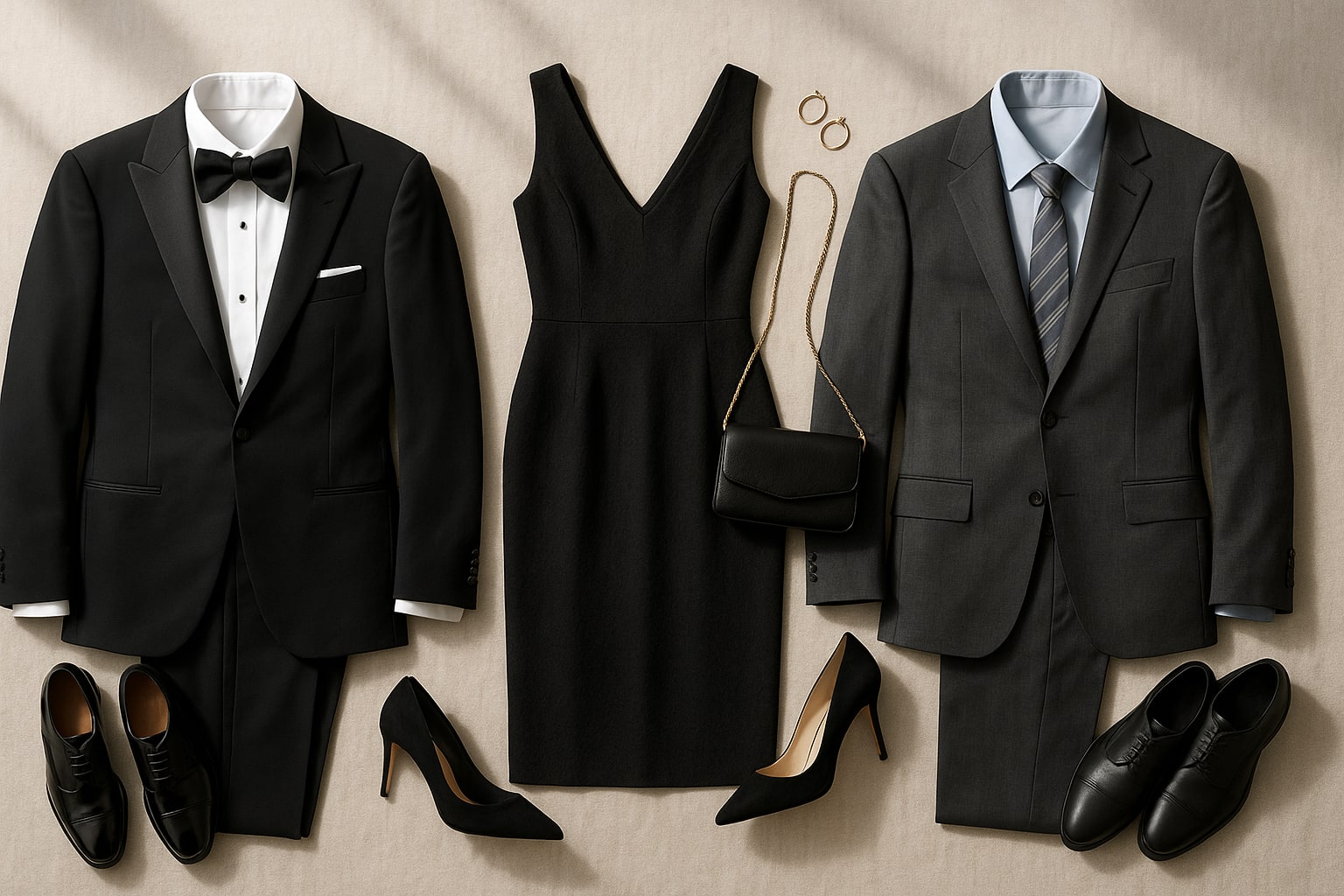
You receive the invitation, read “black tie” at the bottom, and the mental dance begins: long or midi?, a real tuxedo?, and what if I wear cocktail and end up underdressed? Dress codes exist precisely to spare you that noise, but they only work if you know how to read them. Here is the guide you need to keep on your phone for the next wedding, gala or corporate dinner.
Why dress codes still matter
Even in the age of sneakers with evening wear, event etiquette has not disappeared: it has been refined. A dress code tells you the level of formality, the approximate time and the tone of the event. Ignoring it is not rebellion; it is guaranteed discomfort when you arrive and everyone is in gowns and you are not.
Understanding them also saves you money: you know exactly what kind of garment to look for and you avoid buying something that doesn’t fit the occasion.
White tie: the strictest dress code (and the rarest to see)
White tie is the highest step. Think state dinners, a Nobel ceremony and not much else. For women: a floor-length gown, noble fabrics (silk, duchess satin, velvet), optional long gloves and important jewelry. No extreme necklines or dramatic slits.
You are unlikely to see it on a regular invitation. If it appears, don’t improvise: rent or invest.
Black tie: what it exactly means
Black tie indicates a very formal evening event. For men, a tuxedo. For women, two valid options:
- Long dress reaching the ankle or sweeping the floor.
- Formal midi dress in a noble fabric, as long as the sophistication is up to the mark.
Colors: black, jewel tones, nude, subtle metallics. Fabrics lead: crepe, duchess satin, velvet, structured chiffon. Makeup leans toward burgundy lipstick or a soft smokey eye, and hair asks for some intention (a low updo, polished waves).
Avoid it if the dress is too short, if the fabric shines like a costume sequin, or if the neckline belongs to a Saturday night party.
Black tie optional / creative black tie
This is where the game begins. Black tie optional lets you step down a notch: an elegant midi dress, a long jumpsuit in fluid fabric or a highly crafted two-piece. The sophistication remains, the rigidity drops.
Creative black tie invites interpretation: an unexpected color, a cape, a long glove, a statement detail. It is the territory of the most playful stylists and what you will see more and more at urban weddings.
Cocktail dress code: the middle ground
Cocktail is the most common code at afternoon weddings, corporate gala dinners and brand events. The key word is midi. A short dress above the knee also works if the fabric has presence.
References that work:
- Satin midi dress in bottle green, burgundy or ink blue.
- A reinvented little black dress with structured shoulders or an open back.
- A midi skirt and jewel-neck top set.
Mid or high heel, structured clutch, tailored jewelry. This is the territory of Self-Portrait, Rotate, Sandro or, in a more accessible version, Mango and Massimo Dutti.
Semi-formal: the most flexible code
Semi-formal is where people most often err, either by default or by excess. It means dressed up but not gala: a discreet midi dress, a well-cut suit (feminine, in color), a long skirt with a silk blouse.
The difference between formal and semi-formal lies in the fabrics and the weight of the outfit. Formal demands gala; semi-formal asks for restrained elegance. No shiny satin or maxi necklines; yes to crepe, cool wool, matte silk.
Smart casual and business casual: when they apply
These codes almost never appear at weddings, but they do at professional dinners, presentations and daytime events. Smart casual: dark jeans with a blazer and loafer, a shirt dress with ankle boots. Business casual: tailored trousers, a shirt, a structured jacket, no tie (nor a ceremonious feminine equivalent).
Useful rule: if you hesitate between smart casual and cocktail, check the time. Before 7 pm, smart. After, raise the level.
Key differences between codes: quick table
- White tie: mandatory long, sumptuous fabrics, important jewelry.
- Black tie: long or formal midi, noble fabrics, refined makeup.
- Cocktail: midi as the norm, color and fabric with presence.
- Semi-formal: discreet midi or suit, restrained elegance.
- Smart casual: dressed up but relaxed, jeans welcome if the outfit adds up.
How to read an invitation between the lines
When the invitation doesn’t specify a code, look at three things: time, venue and who is hosting. A religious ceremony at noon in a village doesn’t call for the same as an estate at 8 pm. A luxury brand event raises the bar; an intimate beach wedding relaxes it.
If you’re still in doubt, ask the bride, the organizer or someone you trust who is also attending. It is more elegant to ask than to show up out of tone.
Common mistakes to avoid
- Confusing cocktail with party: no aggressively sparkly dresses at five in the afternoon.
- Wearing white (or almost white) to a wedding unless you are the bride.
- Choosing the dress before checking the code.
- Neglecting shoes: a good dress with worn sandals falls apart.
- Overdressing to “avoid being underdressed”: elegance is also about proportion.
With these codes clear, the next invitation can be solved in ten minutes in front of the wardrobe. And that, perhaps, is the greatest luxury of all.