What jeans size should I buy if I'm between two sizes? The rule that always works
If you're torn between two jean sizes, the fabric decides: in rigid denim, choose the larger size; in denim with elastane, choose the smaller one. We explain why it works and how to check before you pay.
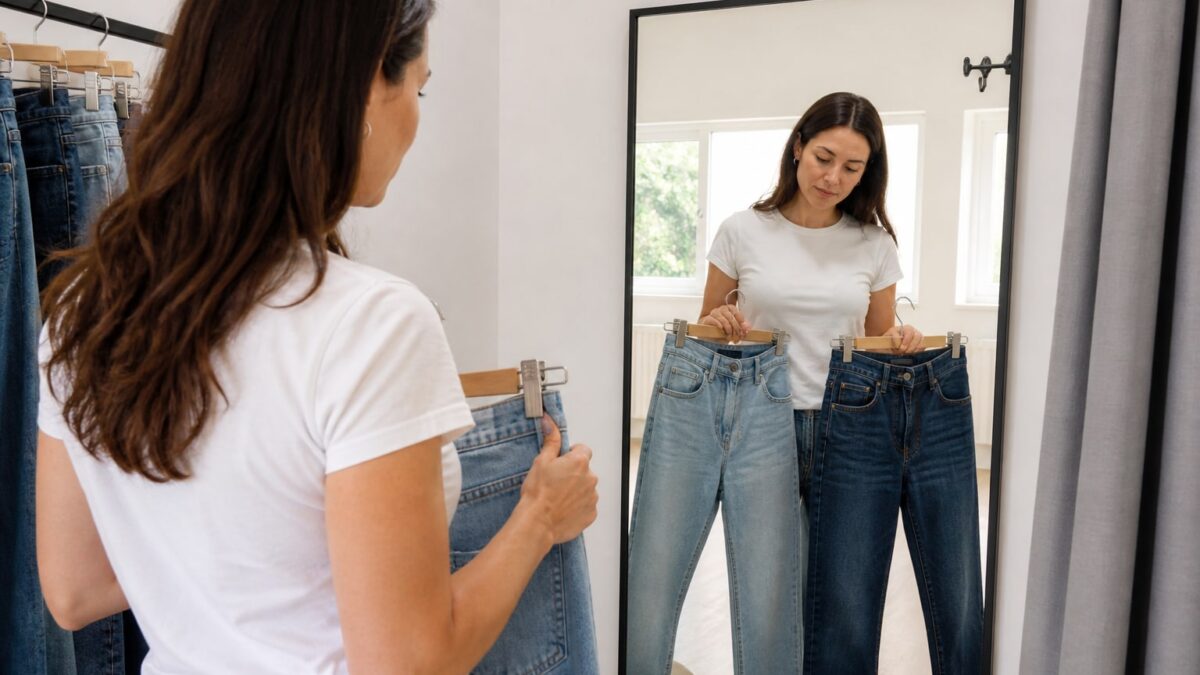
You’ve surely been there: you try on two sizes of the same jeans, both “fit,” but neither one completely convinces you. The 38 pinches a little when you sit down, the 40 hangs loose at the waist. And there you are, with the pants in your hand, not knowing which to take.
There’s a rule that personal shoppers use and that solves 90% of these dilemmas: if you’re torn between two sizes, choose the larger one in rigid fabrics and the smaller one in those that contain elastane. It’s that simple. The reason lies in how each fabric behaves with wear, and we’ll explain it so you never hesitate in a fitting room again.
The rule that always works, summarized
Before going into detail, here is the quick decision based on the type of denim in front of you:
| Fabric type | Usual composition | Which size to choose if you’re unsure | Why |
|---|---|---|---|
| Rigid denim | 100% cotton | The larger size | It doesn’t give or stretch, and it can feel uncomfortable if it’s tight |
| Denim with little elastane (1-2%) | Cotton + elastane | The smaller size, unless it’s tight on the thigh | Gives slightly after the first few wears |
| Stretch denim (3-5% elastane or more) | Cotton + elastane + sometimes modal | The smaller size | It adapts and shapes the silhouette; the larger one becomes baggy right away |
| Coated or waxed denim | Cotton with a rigid finish | The larger size | The finish stiffens the fiber, leaving almost no room to adjust |
This table works as a mental cheat sheet, but it’s worth understanding the reasoning so you can apply it even when you don’t know the exact composition of the pants.
Why the fabric changes everything
Rigid denim: what you see is what you get
100% cotton jeans, without a single elastic fiber, don’t adapt to your body: your body adapts to them with wear. At first they’re tight, and over the weeks they give at the knees and waist until they take your shape. This is the denim of brands like Levi’s in their classic models (the 501, for example) or of labels that work with Japanese denim without stretch.
If you’re torn between two sizes in this type of fabric, the smaller one can become torture in the first weeks: it marks you excessively, cuts off circulation when you sit, and leaves no room even for a hearty meal. The larger one, on the other hand, will fit gradually until it’s perfect, without making you suffer along the way.
Denim with elastane: the equation reverses
Here the behavior is the opposite. Elastane (usually between 1% and 5% of the composition) makes the fabric give from the very first minute and keep giving with use. A stretch jean that feels “just right” in the store will already have settled to your leg two hours after you wear it.
That’s why, if you’re torn between two sizes in a model with elastane, the smaller one is usually the right choice. The larger one, over the days, will end up wide at the waist and with excess fabric at the knee, that “baggy” effect nobody wants in a pair of pants.
How to try on your jeans to settle the doubt
Beyond the fabric rule, there’s a physical test that never fails: sit down. In the fitting room, before deciding, sit down with the jeans on, cross one leg, and bend slightly forward.
- If you can’t breathe normally when you sit, the size is too small, whatever the fabric.
- If when you stand up the waist pulls away from your body by more than two fingers, the size is too large.
- If you feel tightness on the inner thigh when walking, even though the waist closes well, you need the next size up.
An extra trick: pinch the fabric at hip level. If you can grab more than 3-4 cm of excess fabric, there’s plenty of room and you could have chosen the smaller size.
The cut also influences the decision
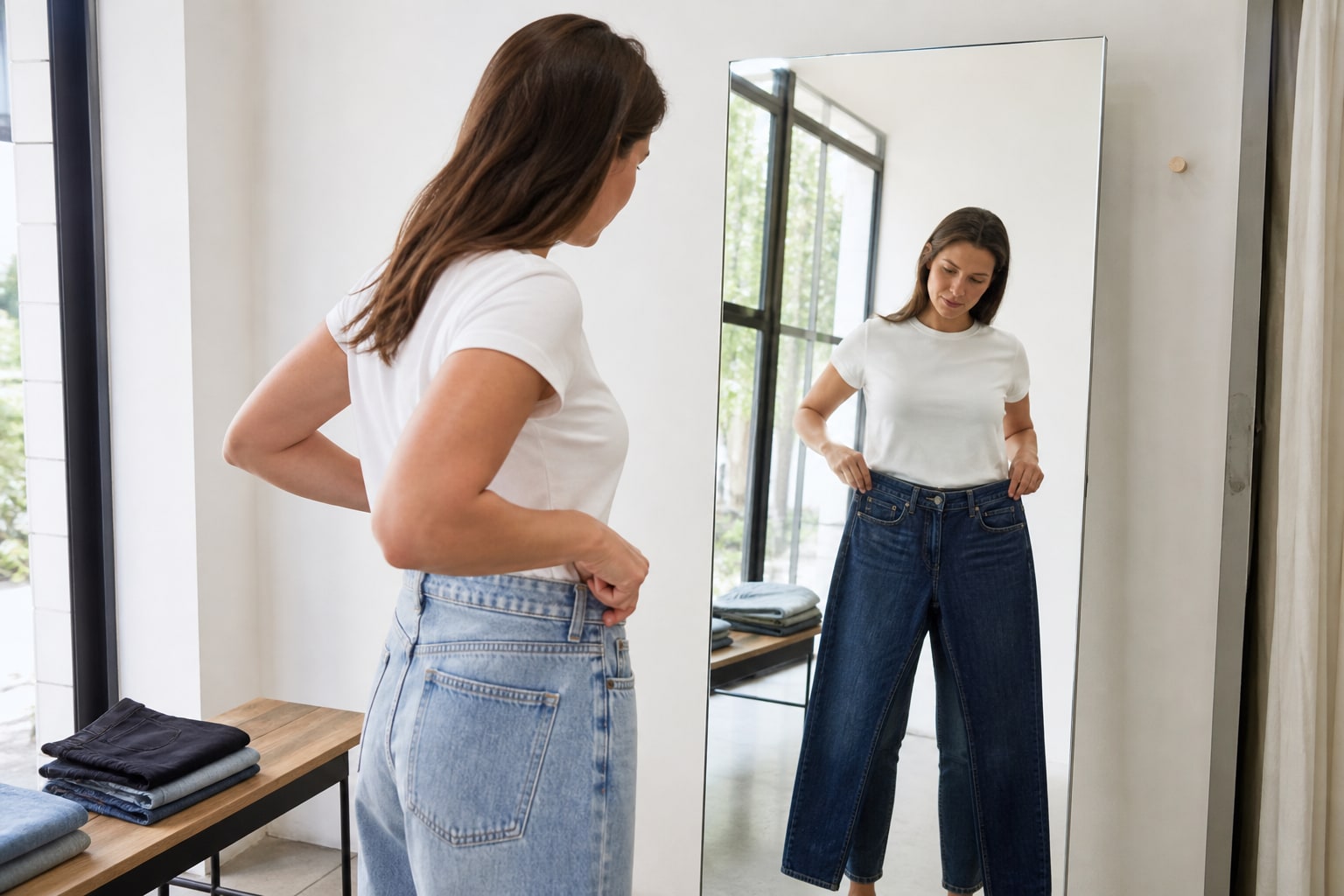
It’s not the same to be torn between two sizes of skinny jeans as of wide-leg ones. The cut changes where the fabric’s pressure is concentrated:
- Skinny and slim: they usually carry more elastane precisely so they can fit snugly. Here the “smaller size” rule almost always holds.
- Straight and mom: they’re often more rigid denim or with very little elastane. If you’re unsure, the larger size will give you better drape.
- Wide leg and palazzo: fit only matters at the waist and hip, the leg falls loose. If the waist feels just right, go up a size without worry: the final effect remains flattering because the leg hides it.
- Boyfriend: it’s designed to look loose, so if you’re unsure, stick with the smaller size; the “borrowed look” is already built into the design.
For wide-leg cuts, by the way, the relationship between length and footwear also matters for the outfit to look proportionate, as we explain in our guide on the correct length of dress trousers, a criterion that also applies, with nuances, to wide-leg jeans.
Sizes don’t mean the same thing across brands
Here’s one of the great traps of jeans sizing: a 38 from Zara, a 38 from Mango and a 38 from COS don’t measure exactly the same. The differences can be as much as 2-3 cm at the waist between brands that use the same number.
| Brand | Sizing trend | What to keep in mind |
|---|---|---|
| Zara | Fitted, tends to run small | If you’re unsure, go up a size in skinny models |
| Mango | True to standard Spanish sizing | Refer to the measurements chart on the website |
| COS | Wider cut, straight fit | Tends to fit loose, consider sizing down |
| Levi’s | Waist/length numbering (W/L) | Use the conversion table, not the “letter” size |
| Agolde / premium denim | Factory slim fit | The stretch gives a lot, go down half a size if you’re unsure |
That’s why, when buying online and unable to try on, always check each brand’s specific measurements chart in real centimeters, and don’t rely only on the number or the letter.
What happens with shrinkage in the wash
Rigid denim can shrink between 2% and 5% in the first washes, especially if you use hot water and a dryer. This reinforces the logic of the rule even further: if you already know the fabric will shrink a little, choosing the larger size gives you that safety margin.
With stretch denim it’s the opposite: elastane loses part of its elasticity with machine washing and drying, so a pair of jeans that started out snug can end up looser over time, not tighter. Washing inside out, in cold water and air drying extends the life of the original fit.
The takeaway you leave the fitting room with
Next time you’re torn between two sizes, you don’t need to memorize compositions or do complicated calculations. Check the label: if there’s elastane, the smaller size; if it’s 100% cotton, the larger one. Sit down in the pants before deciding, and remember that the size number matters less than how the specific fabric in front of you behaves.
A well-chosen pair of jeans is probably the timeless garment you’ll wear the most times this year. It deserves those extra five minutes in the fitting room.